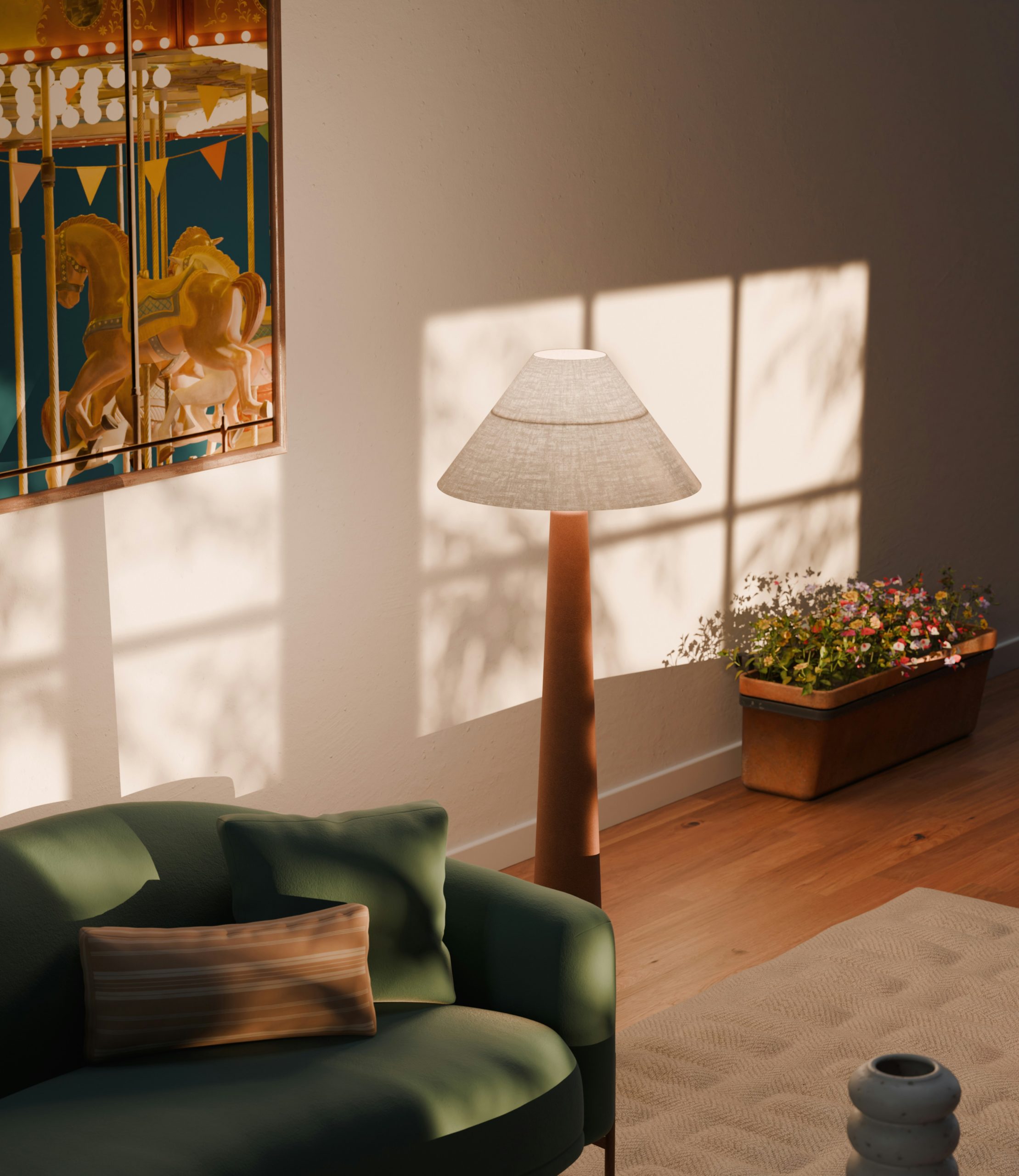
In the previous chapter, I asked what happens when home stops feeling like somewhere you rest.
I’ve been thinking about how your home makes you feel and whether changing your surroundings could help you enjoy being there again.
How our rooms change around motherhood, caring, grief and separation. How they hold the evidence of what has happened to us, sometimes long after everybody else’s life has moved on.
But I keep coming back to the other side of that question.
If our surroundings can change around us because of necessity, could we also change them to make everyday life feel better?
What would help us feel more rested, more connected, or simply more at home? Somewhere to rest. Somewhere to think. Somewhere to invite people. Somewhere to enjoy the life we spend so much time maintaining.
Because ‘I want to change the living room’ might sometimes mean something we haven’t quite found the words for yet.
I want somewhere that feels like mine. I want to enjoy being here again. I want my home to reflect the life I’m living now.
And so of course that sent me down another rabbit hole.
Into lighting, colour, comfort, scent and the women creating things that help us experience our surroundings differently.
Before The Mood Board, What Do You Need?
It’s remarkably easy to begin with what a room should look like.
We scroll Pinterest. Save rooms we love. Compare colours and sofas. Wonder whether we could recreate the feeling in our own homes.
But a saved image can’t tell us everything about living somewhere. It can’t tell us whether the chair is comfortable. Whether the light feels harsh in the evening. Whether there’s anywhere to put your cup. Whether the beautiful open shelving has become another thing you feel obliged to maintain.
Or whether the woman who lives there has anywhere to be alone.
That’s what interested me about interior designer Louisa Grey and her studio, House of Grey.
The studio describes its work around creating restorative home retreats: places where people can reconnect, replenish their energy and slow down. There is attention to the experience of occupying a room, alongside its appearance.
And that feels like a useful place to begin. Before asking which sofa, perhaps we could ask what we need the room to make possible.
A woman living alone after a separation might want somewhere she feels comfortable inviting friends. A woman whose home is always busy might want a corner where she can hear herself think. Someone working from the dining table might need a way to stop feeling as though she’s still at work when she sits down to eat.
And someone whose days have become very quiet might want music, colour and evidence of life.
We use the word ‘sanctuary’ as though it describes one particular kind of room, but what feels restorative to one woman might feel empty to another.
Perhaps the first question is simply: What do I need more of when I’m here?
Does Your Home Ever Let The Day End?
Think about your kitchen at nine o’clock in the morning. Now think about it at nine o’clock at night.
Different activities. Different energy. Possibly a completely different version of you standing in it.
But is it lit exactly the same way?
We can ask one ceiling light to do an extraordinary number of jobs. Help us find the school shoes, light a work call, make dinner and then somehow make the room feel inviting when we finally sit down.
A lamp beside a chair creates a different experience from lighting the whole room. Light over a table can make that table feel like somewhere to gather. Switching off the brightest lights can become part of moving from one part of the day into another.
There’s a biological dimension here too. Light and darkness are major influences on our circadian rhythms, the roughly twenty-four-hour patterns involved in processes including sleep and wakefulness.
But there’s also an everyday question worth asking. Does anything about your environment change when the working part of your day is supposed to be over?
The laptop may be closed, but the papers are still there. The kitchen has been cleared, but the bright lights still make it feel ready for the next task.
Perhaps changing the atmosphere could help us mark a boundary that otherwise never quite arrives. A small signal.
For now, we’re finished.
Would You Still Choose It Now?
Colour is where this becomes particularly interesting to me.
Because choosing a colour sounds straightforward until you start thinking about whose preferences are represented in your home.
The walls you agreed on with a former partner. The neutral scheme you chose because you were worried about getting it wrong. The bedroom you decorated ten years ago and haven’t really looked at since. The colour you keep saving, then dismissing because it feels too bold for somebody like you.
Somebody like you.
Who decided what she was allowed to like?
That thought led me to colourist Francesca Wezel, founder of Francesca’s Paints.
Francesca established her business in 1996 and creates colours by hand and eye in her Battersea studio. Alongside making paint, she offers colour consultations, working with people to find combinations for their own homes.
I like the attention in that. The idea that choosing a colour begins with the particular person and place.
You might find yourself drawn to a deep green, a soft pink, a warm white or something you would never previously have considered. The useful part is noticing your response.
Would you enjoy living with it? Does it belong to your taste now, or an idea of what your home ought to look like? And would you still choose what’s already there?
We can spend years living inside decisions without remembering that some of them are available to revisit.
Of course, a shared home involves other people. Renting, budgets and practicalities affect what we can change, but even then, there may be room for a choice.
A lampshade. A print. A cushion. The colour of the bedding. Something you chose because you enjoy looking at it.
And perhaps that enjoyment is a sufficient reason.
A Beautiful Sofa. But Do You Ever Sit Down?
Then there’s comfort. Actual, physical comfort.
The chair you can sit in for more than twenty minutes. Somewhere to put your feet. A sofa you don’t spend the entire evening rearranging yourself on.
But even when we have somewhere comfortable, what has it become? Somewhere to fold washing? Your second desk? The place you sit with your phone while mentally preparing tomorrow?
Perhaps the sofa is perfectly comfortable. Perhaps the difficulty is finding a moment when you feel able to enjoy it.
A beautiful seat can’t redistribute the responsibilities in a household, but looking at how we use it might reveal something about the life happening around it.
Do you sit down only when everything is finished?
And, realistically, when is everything ever finished?
I wonder how many of us have created places to rest that we treat as rewards we haven’t earned yet. The chair by the window in the cream front sitting room remains empty, while the book stays unopened on the table.
We keep walking past the very thing we imagined enjoying.
Maybe making a home feel different involves changing what happens there, as well as what we put in it.
Why Do Guests Get The Good Bedding?
There’s a particular kind of care we can become very good at offering other people.
Fresh towels, ironed bedding, a cleared bedside table, the fancy wine glass and a lit candle. A room we’ve thought about before they arrive.
We imagine what they might need and try to make the experience pleasant.
Then we go back to our own bedroom, where the bedside table is covered in things we haven’t dealt with, laundry’s waiting to be put away and the bedsheets unironed.
I’m interested in that difference.
Chrissie Rucker founded The White Company after struggling to find the beautiful, good-quality white home essentials she wanted. The business began with a small mail-order collection and grew from there.
It’s easy to look at an established brand and forget that somewhere behind it was a woman noticing something she wanted to experience differently. In this case, the things we sleep in, wrap ourselves in and use every day.
And that brings me to something more ordinary than a perfectly styled bedroom.
Do you like the feel of your own bedding? Is there a light you can comfortably read by? Can you put a glass of water down without moving six things first? Does your bedroom feel like somewhere you arrive, or somewhere you store whatever you couldn’t find a space for elsewhere?
There can be real pleasure in making these things more comfortable.
Using the towel you’ve been saving. Putting clean bedding on because you want to enjoy it tonight. Clearing enough space to reach the lamp.
These are small acts of consideration for the person who lives there every day.
You.
What Helps You Stop Doing?
Scent brings us back to the previous chapter, where VERDEN’s story opened up the relationship between familiar places, memory and the way we feel.
But this time, I became interested in how a sensory experience might become part of an everyday ritual.
That’s where NEOM came into the picture.
Co-founder Nicola Elliott describes spending years working long hours as a journalist, experiencing poor sleep, stress and low energy. Her exploration of wellbeing and essential-oil blends became the starting point for the brand.
What interests me is the woman noticing how her life felt before there was a business. The point at which the way she was living prompted her to explore something different.
And it made me think about the difference between buying something associated with rest and making room to experience it.
You can own the bath oil and never run the bath. Have a candle on the shelf and watch it gather dust. Buy something lovely with the intention of taking time for yourself, then leave it unopened.
Perhaps the ritual begins with deciding that a moment can belong to you.
Closing the laptop. Putting on music. Running the bath. Sitting somewhere you enjoy, without immediately finding another task to do there.
A fragrance might be part of that experience too. So might silence, an open window or the sound of a familiar song.
What matters is whether the moment fits you. And whether there is room in your actual life for it to happen.
Making Space Without Erasing Your Life
There is something I keep coming back to as I explore all of this.
Creating a home that feels different doesn’t necessarily mean filling it with new things. Sometimes it begins with looking again at what is already here.
The chair that could move into the natural daylight. The table that could be repaired. The photograph you love but haven’t yet found somewhere to put. Something stored away that you would enjoy seeing again.
And when we do want to bring something different into our homes, it doesn’t have to be newly made.
That led me to Vinterior, whose founder Sandrine Zhang Ferron’s story began with her search for a particular vintage chair.
Something she wanted to find became the starting point for a marketplace through which other people could discover pre-loved furniture and homewares.
There’s something lovely about that connection between one woman’s search and what it opened up for others. And about choosing a piece that has already had a life, then giving it a place in yours.
A room can grow around the people living there, piece by piece. Because real homes contain real lives. Children’s belongings. Mobility aids. Medication. Work equipment. Things waiting to be repaired. Things belonging to people we love.
And the objects we explored in the previous chapter still matter. The chair that belonged to someone who died, the photographs and the things you aren’t ready to put away.
Changing your surroundings doesn’t have to mean removing the evidence of your past.
You might give a treasured object somewhere it can be enjoyed, or keep a familiar piece of furniture and change what sits around it.
You might leave something exactly where it is. You don’t have to change it simply because your life has changed. What matters is whether it still feels right for you now.
Sometimes that means making space and sometimes it means bringing more of yourself into view. Books you love. Colour you enjoy. Photographs of places you want to remember.
Somewhere to do the thing you keep saying you miss.
What Are You Making Room For?
Looking at the women behind the brands I’ve spoken about, I’m struck by how they’ve built businesses around everyday experiences we can so easily overlook.
How a room feels to occupy. A colour we want to live with. The bedding we use every night. A moment we want to experience. A piece of furniture we can imagine becoming part of our lives.
And it brings me back to the same question: What do you want more of in your life?
Because the answer might help explain what you want from the space.
If you want more connection, perhaps you need somewhere people can comfortably gather.
If you want to read again, perhaps your books need to be within reach of somewhere you actually like sitting.
If you want to enjoy your mornings, perhaps the chair by the window matters more than another beautifully organised cupboard.
If you want work to occupy less of your life, perhaps it needs somewhere to go when the day ends.
None of these choices guarantees a particular feeling, but they can make an experience easier to access.
A room can offer an invitation. To sit. To notice. To make something. To have somebody over. To enjoy being here.
And perhaps that’s the part of creating a home we don’t always give enough attention to. We think about what it says about us. I’m becoming more interested in what it makes possible for us.
And Sometimes, We Need To Go Somewhere Else
But there’s another thought I can’t quite leave alone.
Sometimes, even when we love our homes, it is difficult to rest in the place where we know exactly what needs doing. We notice the washing, remember the email, hear the cupboard door that needs fixing and think of the appointments that need booking.
So what happens when, for a little while, somebody else has thought about the room, the food, the lighting and the welcome?
When we arrive somewhere we aren’t responsible for maintaining?
What is it about a beautiful hotel, a retreat or simply a night away that can make us feel different?
And how much of that feeling comes from the place itself, or from who we get to be while we’re there?
That’s where I’m going next.
With warmth,
Becky
Founder & Editor, Becoming Her
CONTINUE THE CONVERSATION
What would you like your life to make more room for?
The Becoming Journal offers a place to explore what has shaped you, what matters to you now, and what you might want to choose next.
A guided conversation with the woman you’ve always been becoming.
EXPLORE THE BECOMING JOURNAL. £33. INSTANT DOWNLOAD.
Photo by Planet Volumes on Unsplash