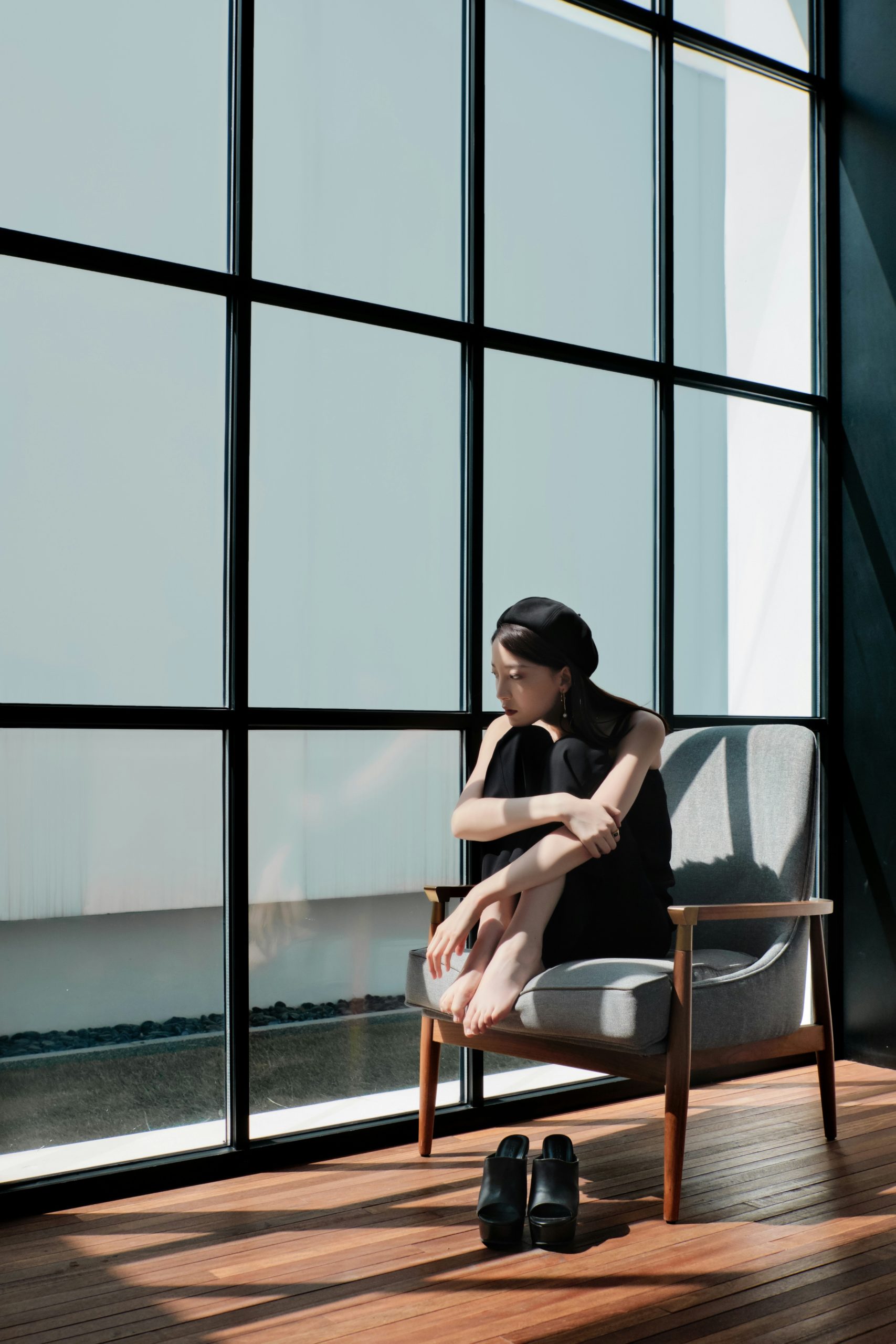
I’ve been thinking about home after a life change. How somewhere so familiar can suddenly feel different, even when the house itself has barely changed.
Not interiors. Not what colour we paint the walls or which cushions we put on the sofa, but what home actually means to us.
Because we talk about home as though it is a fixed thing. Our safe place. Our sanctuary. The place we come back to at the end of the day.
But home can change meaning remarkably quickly.
Sometimes the house itself barely changes at all. And sometimes, almost overnight, everything inside it does.
In my previous chapter, I wrote about what happens when life asks us to become more than one version of ourselves at the same time.
The wife who becomes a carer. The woman becoming a mother while grieving someone she loves. The daughter caring for a parent while still trying to hold together her own home, work and family.
And I haven’t stopped thinking about the rooms those women are living inside. Because when our lives change, the spaces around us often change with them.
When Home Changes Function Overnight
A living room can become a bedroom.
A dining table can become somewhere medication is organised.
A hospital bed can arrive where the Christmas tree usually stands.
Medical equipment can begin appearing in rooms that once held completely ordinary family life.
A woman going through a divorce might temporarily move back in with her mum, taking her children and a collection of bags into a house she thought she’d left decades ago.
Another might spend half the week at home and the other half sleeping at an elderly parent’s house because they can no longer safely be left alone.
And then there’s motherhood.
A bedroom becomes somewhere a baby feeds every two hours. There are bottles on the kitchen side. Sterilisers, muslins over radiators, changing mats, nappies and a Moses basket where something else used to be.
Some of these things represent something desperately wanted.
Some represent love. Some represent survival. Some represent the extraordinary lengths we’ll go to for another human being. But they also change the meaning of a space.
Home can become physically reorganised around a version of your life you haven’t had time to adjust to yet.
And I wonder how often we acknowledge that. We talk about adjusting to motherhood. Adjusting to caring, divorce or grief. But we’re not only adjusting internally.
Sometimes the physical evidence that our life has changed is everywhere we look.
And Then There Are The Cards
I keep thinking about the cards.
Congratulations on your new baby. Thinking of you. Sorry for your loss.
For a while, they’re everywhere. On the mantelpiece, the windowsill, or propped against photographs.
And people come too. They knock on the door with food. They make cups of tea. They ask whether you’ve eaten. They check how you’re managing. They hold the baby while you sleep.
They sit on your sofa and talk about absolutely nothing, because sometimes absolutely nothing is exactly what you need.
For a little while, the house is full of evidence that something enormous has happened. And then, gradually, ordinary life resumes. Not necessarily yours. Everybody else’s.
The cards come down. The flowers wilt. The food stops arriving. People stop popping in quite as often, and the messages become less frequent.
And you’re left inside the same house with the life that happened there.
I know there’s a particular kind of loneliness in that. I’ve lived it. When life around you seems to have moved on, but you’re still learning how to live with what has changed.
What Happens When The Things Leave Too?
And then there’s the opposite.
The equipment goes. The hospital bed is collected. The changing table is no longer needed. The cot is dismantled. The medication disappears from the kitchen counter.
The suitcase you kept half-packed while moving between two homes is finally emptied.
These endings aren’t all the same. Some arrive with relief. Some with grief. Some with a mixture you weren’t expecting. But suddenly, there’s a space. Quite literally. An empty space where evidence of an entire version of your life used to be.
We tend to think removing something restores a room to what it was before. But does it? Because you aren’t who you were before.
The room may technically have returned to its old purpose, but the woman standing in it hasn’t. And perhaps that’s why home can feel so unfamiliar after a major period of change.
The room may look familiar again. But its meaning has changed.
And so have you.
The Home Remembers
That idea sent me somewhere else.
Because our memories of home aren’t only visual. They’re sensory. A smell can take us somewhere before we’ve even consciously realised where we’re going.
And that led me to VERDEN, a fragrance brand for bath, body and home, founded by Charlotte Semler and Arabella Preston.
What caught my attention was the experience behind it.
VERDEN’s story describes Charlotte returning to her childhood beach house in Denmark after decades away. There, she recognised how much the familiar landscape, water, fragrance and long summer light contributed to her sense of happiness.
That experience helped inspire the brand.
And I found myself thinking about what it means to return somewhere familiar as a different woman. The place holds one version of you. You arrive carrying all the versions you’ve become since.
Perhaps what moves us isn’t only the memory of the place, but the memory of how we felt when we were there. What we noticed. What we enjoyed. What life felt like before other things occupied so much of our attention.
Charlotte’s story made me think about how quietly our surroundings can connect us with parts of ourselves we haven’t thought about for years.
And although VERDEN works with fragrance, the question underneath its story reaches beyond scent.
What is it about a place that makes us feel more like ourselves?
Our homes are full of sensory memories. The perfume somebody always wore. Their chair. The mug they always used. The sound of their key in the door. The smell of a newborn’s bedroom. The hum of medical equipment.
And then the silence when it disappears.
Our homes don’t simply contain our belongings, they contain evidence of who we’ve been there with.
And when a person, a role or a period of our life is no longer part of the everyday, the objects don’t necessarily lose their meaning. Sometimes they gain more.
The Things We Cannot Throw Away
This is the part I keep coming back to, because home isn’t only atmosphere. It isn’t just scent or lighting or colour.
It’s things.
The battered mug nobody else is allowed to throw away. The photograph on the stairs. The blanket somebody bought when the baby was born. The dining table that has witnessed birthdays, arguments, homework, Sunday dinners and bad news. The chair that will forever be their chair. The ridiculous ornament you’ve moved house three times because somebody you love bought it for you.
Some objects are objectively beautiful. Some aren’t. But that’s almost beside the point. Their value isn’t always in what they look like. It’s in what they know about us.
A hospital wristband. A handwritten card. A child’s first shoes. A photograph or a letter. Something belonging to somebody who is no longer here.
Ordinary things that somehow become impossible to throw away. Because of who they belonged to. Or who gave them to us. Or the version of ourselves we were when we held them.
And perhaps that’s another way our homes quietly hold our identities.
We don’t only fill them with things we’ve bought. We fill them with evidence of the lives we’ve lived. The people we’ve loved. The people we’ve lost. The children we’ve raised. The places we’ve been.
The versions of ourselves we’ve already been.
Perhaps our homes become physical archives of those lives. And maybe that’s why clearing a drawer, packing away a baby’s clothes or sorting through somebody’s belongings after they’ve died can feel like so much more than tidying.
We’re not simply deciding what stays and what goes. Sometimes we’re deciding what we want to keep close, what we can store away, and what we aren’t ready to make a decision about yet.
When Home No Longer Reflects The Woman Living There
But not every woman reading this will have experienced a bereavement.
She might not be caring for someone. She might not have just had a baby.
There may be no obvious life-changing event she can point to. No clear before and after. Just a growing sense that something feels different.
Her life might look perfectly fine. She might have a beautiful home. She may be incredibly grateful for it.
And still… something about it doesn’t feel quite right anymore.
Maybe the sofa is somewhere she folds washing while watching television. The kitchen is somewhere she spends more time doing than enjoying. The spare bedroom became her office, and work has slowly spread beyond it. Her bedroom is where she scrolls at the end of the day, too tired to do the things she’d hoped to have time for.
Every room works. But does any of it feel like somewhere she can simply be?
And that’s a slightly different question.
Because perhaps home doesn’t only reflect our taste. It reflects our lives, our responsibilities, our relationships, our habits and our identities. The roles we’ve occupied there. The decisions we made years ago and haven’t thought to revisit.
Sometimes the woman changes before the environment has caught up.
And sometimes she begins to notice that her home makes room for everything she has to do, but very little of what she enjoys.
Maybe That’s Why We Suddenly Want to Change Something
Move the sofa. Paint the walls. Clear the cupboard. Take the photographs down. Put different ones up.
Buy flowers. Change the bedding. Open every window. Book a night somewhere else.
We often dismiss these things as aesthetic.
But I’m starting to wonder whether sometimes we’re doing something much more interesting. Maybe we’re creating physical evidence that change is allowed.
It could be we’re trying to make the world around us feel slightly closer to the life we can imagine ourselves living.
Rearranging a room won’t make a difficult decision for us. Fresh bedding won’t undo a loss. But choosing something for ourselves can still mean something.
Especially when so much of the space has been shaped by necessity, habit or other people’s needs.
It might begin with something small. A chair by the window where you actually sit. A photograph you want to see every morning. Somewhere to put the book you keep meaning to read. A little space that reflects what you enjoy now.
And that’s where my next rabbit hole begins.
Because if our environments can change around us without our permission, can we change them intentionally too? Can the way a room is designed affect how we feel inside it?
What does light do? Colour, clutter, texture, nature, sound, scent?
Why can walking into one room make our shoulders drop while another makes us feel instantly on edge?
And what are we actually trying to create when we say we want our homes to feel like a sanctuary?
That’s what I’m exploring next.
Because I’ve spent a long time thinking about the world within us. Our identities, our patterns, our beliefs and our nervous systems. The versions of ourselves we’ve had to become.
But we don’t become in a vacuum.
We become inside homes, inside relationships, inside workplaces and inside rooms that have witnessed different versions of us.
So maybe the question isn’t only; Who am I becoming?
Maybe it’s also; What kind of world am I trying to become her in?
With warmth,
Becky
Founder & Editor, Becoming Her
CONTINUE THE CONVERSATION
Perhaps this chapter has left you wondering how much of your life still reflects you and how much has grown around what everyone else needs.
The Becoming Journal is a guided conversation with the woman you’ve always been becoming. A place to explore what has shaped you, the roles you’ve grown into, and what you want to choose for yourself next.
You don’t need to know what comes next to begin.
EXPLORE THE BECOMING JOURNAL. £33. Instant download.
Photo by Dynamic Wang on Unsplash
One response to “What Happens When Home Stops Feeling Like Somewhere You Rest?”
[…] In the previous chapter, I asked what happens when home stops feeling like somewhere you rest. […]